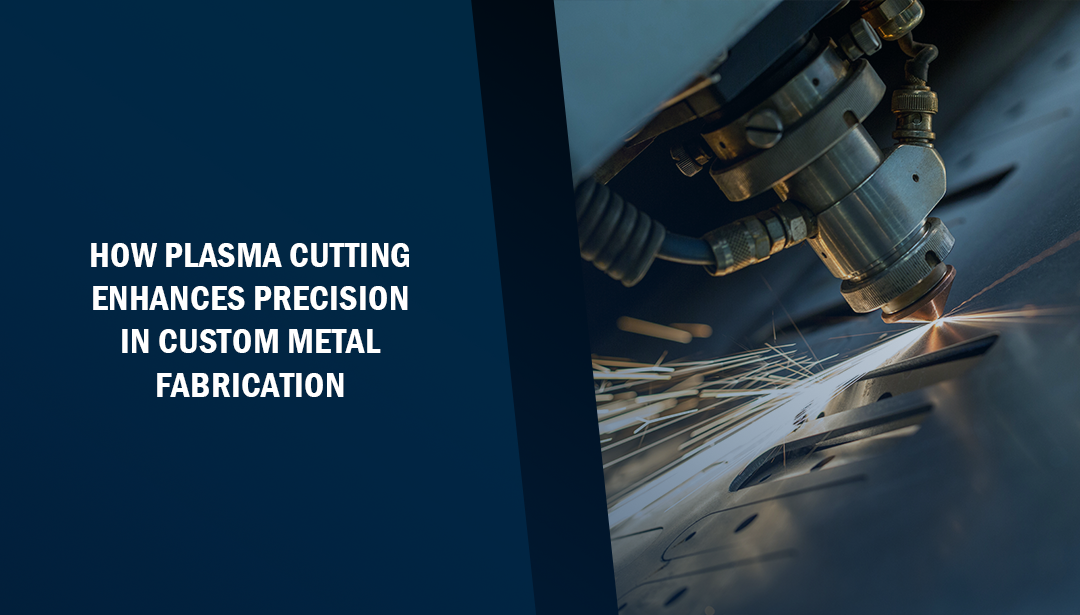
Metal fabrication shops face constant pressure to produce clean, accurate cuts without creating excessive secondary finishing work. Excess slag, edge cleanup, and dimensional inconsistencies can slow production schedules and increase labor costs, particularly on custom fabrication projects with tight tolerances. Plasma cutting changed the fabrication process by allowing shops to cut conductive metals quickly while maintaining repeatable accuracy across a wide range of material thicknesses.
Modern CNC plasma systems combine cutting speed with automated motion control to support both production efficiency and dimensional consistency. This capability is especially valuable for fabricators handling custom components, structural assemblies, and short lead-time production work. This article explains how plasma cutting works, outlines the precision capabilities of modern systems, identifies compatible materials, and examines why plasma cutting remains a preferred process for custom metal fabrication applications.
What Is Plasma Cutting and How Does It Work?
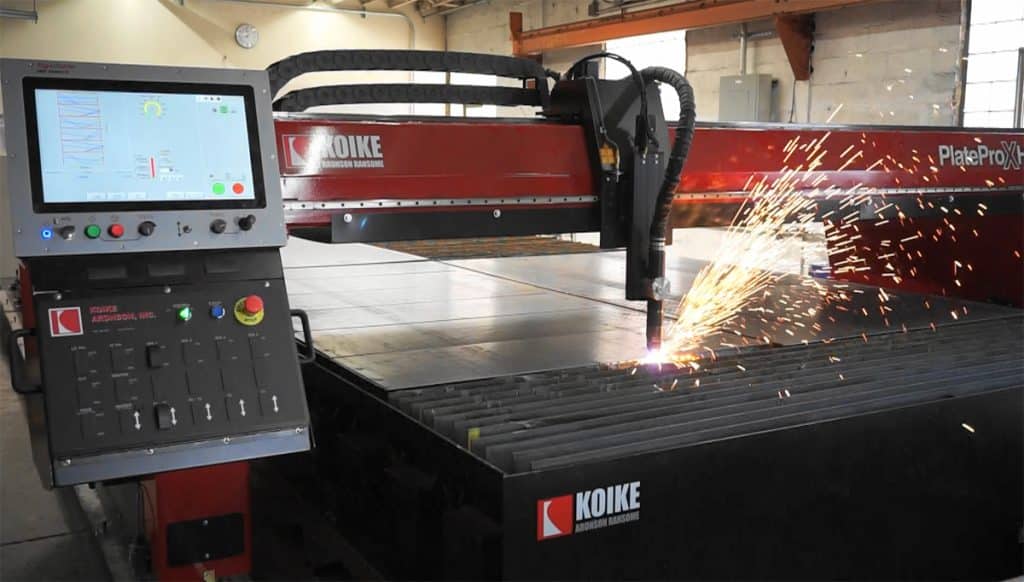
Plasma cutting is a thermal cutting process that uses electrically ionized gas to cut through conductive metals. The process begins when compressed gas passes through a constricted nozzle and becomes energized by an electrical arc. This creates plasma, a high-temperature conductive gas capable of reaching temperatures above 20,000 degrees Celsius. The plasma arc melts the metal while the high-velocity gas stream removes molten material from the cut path. Typical plasma cutting systems include a power supply, torch assembly, electrode, nozzle, gas delivery system, and CNC motion controls when automated cutting is required. Together, these components produce fast, controlled cuts across a wide range of conductive materials.
Modern plasma systems use CNC programming to maintain consistent torch height, travel speed, and cut geometry throughout the cutting process. Torch height control is particularly important because arc distance directly affects cut quality, bevel angle, and edge consistency. High-definition plasma systems further refine the process by tightening arc constriction and improving gas flow stability. These adjustments allow for narrower kerf widths and improved dimensional accuracy compared to conventional plasma systems. Depending on material thickness and system configuration, plasma cutting can support both high-speed production cutting and detailed profile work. Fabricators commonly use plasma systems for structural steel components, equipment parts, base plates, brackets, and custom assemblies requiring repeatable results.
How Precise Is Modern Plasma Cutting?
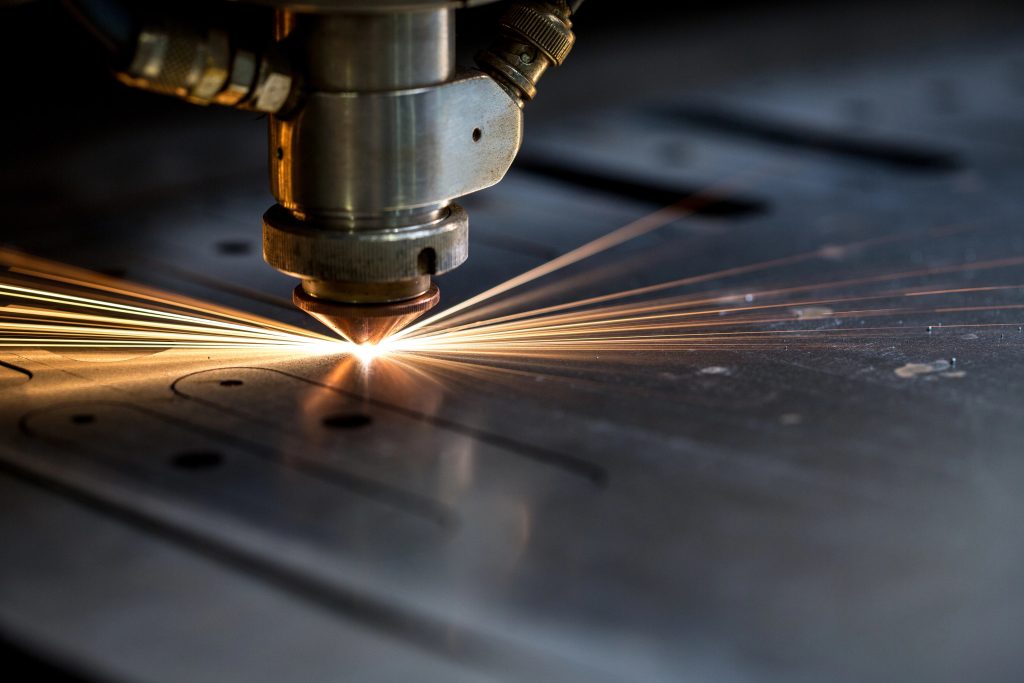
Modern plasma cutting systems can achieve precision levels suitable for many structural, industrial, and custom fabrication applications. Standard CNC plasma systems typically operate within tolerance ranges of approximately ±0.5 mm to ±1 mm depending on machine calibration, material thickness, and cutting speed. High-definition plasma systems can achieve tighter tolerances closer to ±0.25 mm under controlled conditions. Cut accuracy also depends heavily on operator setup, consumable condition, and proper torch height management throughout the cut cycle. Thinner materials generally produce tighter tolerances and cleaner edge profiles than thicker plate sections. Material warping caused by heat input can also influence final dimensional consistency on larger parts.
Plasma cutting naturally produces a slight bevel along the cut edge due to the shape and energy distribution of the plasma arc. High-definition systems reduce this bevel significantly compared to conventional plasma equipment, but some taper remains characteristic of the process. Edge angularity becomes more noticeable as material thickness increases or consumables begin to wear. Fabricators often account for this characteristic during design and nesting to maintain acceptable finished dimensions. While plasma cutting may not achieve the same edge condition as laser cutting on thin-gauge materials, it provides a strong balance between speed, cut quality, and operational cost on thicker conductive metals. For many fabrication environments, plasma delivers sufficient precision while supporting faster throughput than alternative thermal cutting methods.
What Materials Can Be Cut with Plasma?
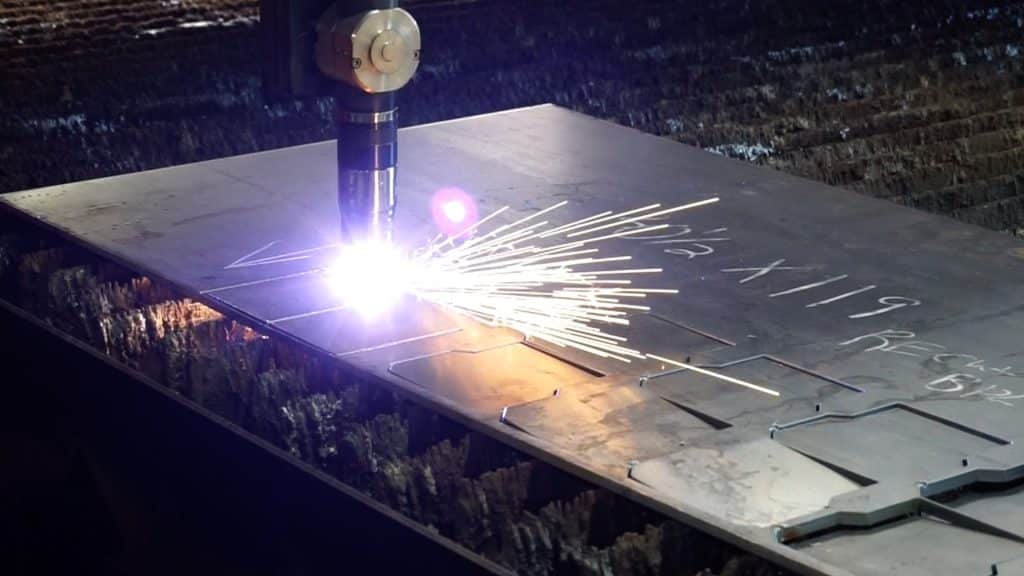
Plasma cutting is limited to electrically conductive metals because the process relies on an electrical arc to generate plasma. Common compatible materials include carbon steel, stainless steel, aluminum, brass, copper, titanium, and nickel alloys. Carbon steel remains one of the most frequently processed materials due to its widespread use in structural and industrial fabrication. Stainless steel and aluminum are also commonly cut using plasma systems for applications requiring corrosion resistance or reduced weight. Plasma systems can process both thin sheet metal and thicker plate material depending on the available amperage and machine configuration. Material thickness capacity varies significantly between entry-level systems and industrial high-definition equipment.
Non-conductive materials cannot be processed using plasma cutting technology. Wood, plastic, fiberglass, rubber, and ceramic materials do not support the electrical conductivity required to sustain the plasma arc. Certain coated or contaminated metals may also require additional preparation before cutting to maintain cut quality and minimize contamination of consumable components. Copper and brass can be cut successfully, although their high thermal conductivity may require parameter adjustments to maintain edge quality. Material surface condition, flatness, and cleanliness also influence cut consistency and consumable life. Proper parameter selection for amperage, gas type, and travel speed remains necessary to achieve acceptable results across different material types and thicknesses.
Advantages for Custom and Complex Fabrication Work
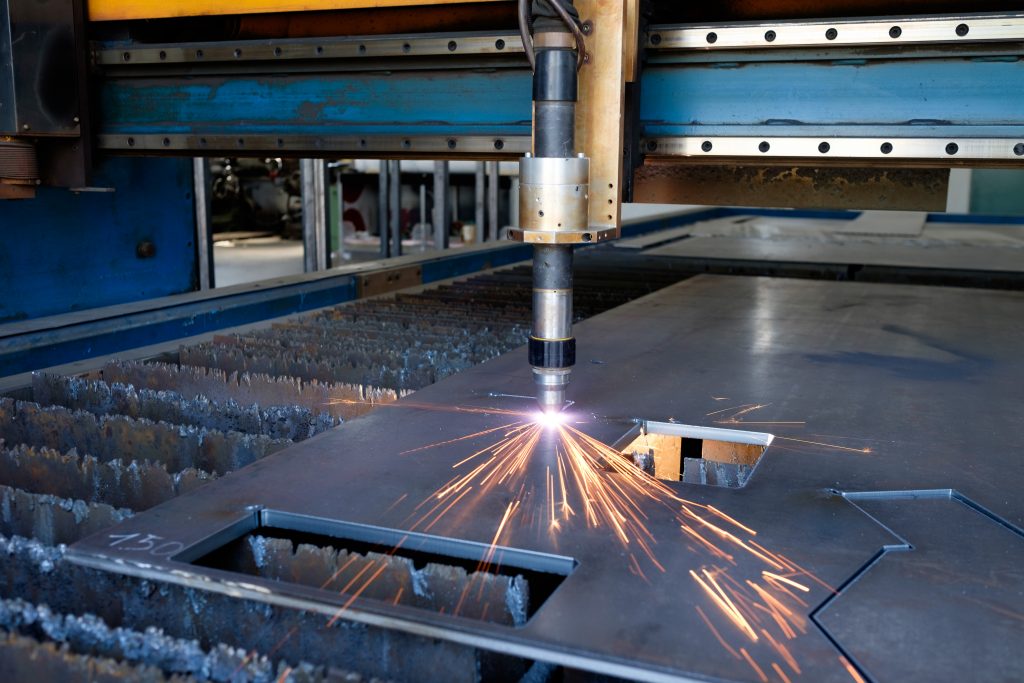
Plasma cutting provides several advantages for fabrication shops producing custom parts, structural components, and low-volume production work. CNC-controlled plasma systems can process complex geometries, internal cutouts, bolt holes, and irregular profiles with consistent repeatability. Compared to manual cutting methods, CNC automation reduces layout time and minimizes operator variability during production. Plasma cutting also requires relatively little material preparation before processing, allowing fabricators to move parts through production more efficiently. Fast cutting speeds help shorten turnaround times for projects with demanding schedules or high part counts. This combination of speed and flexibility makes plasma cutting well suited for custom fabrication environments.
Heat input from plasma cutting is generally concentrated within a relatively narrow zone, which helps reduce distortion compared to some alternative thermal cutting processes. Reduced distortion becomes especially important when processing thinner materials or assemblies requiring tight fit-up tolerances during welding and fabrication. Cleaner cuts also reduce the amount of grinding and secondary edge preparation required before assembly or coating. Modern nesting software further improves material utilization by arranging parts efficiently across plate stock. Automated CNC systems can store repeatable programs for future production runs, supporting consistency across multiple batches. These capabilities allow fabrication shops to maintain production efficiency while meeting dimensional and quality requirements for custom projects.
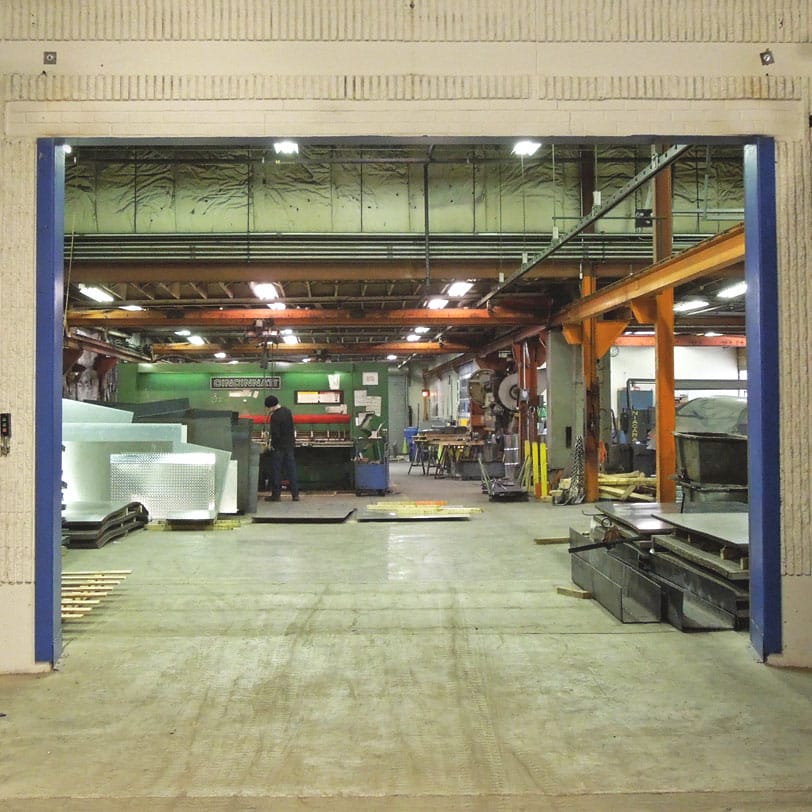
Metal Fabrication Services provides CNC plasma cutting capabilities for custom fabrication projects ranging from simple production parts to complex structural components. The company operates modern plasma cutting systems designed to produce accurate cuts, controlled edge quality, and repeatable part dimensions across a wide range of conductive metals. Experienced operators manage programming, material setup, consumable performance, and cut parameter selection to maintain production consistency. Plasma cutting capabilities support applications involving carbon steel, stainless steel, aluminum, and other conductive materials commonly used in industrial fabrication. Combined with fabrication, welding, and assembly capabilities, these systems help support complete project workflows from raw material processing through finished production. Fabricators, manufacturers, and contractors looking for precision plasma cutting support can work with Metal Fabrication Services for projects requiring both production speed and dimensional accuracy.
Ready to Get Started with us on your next Metal Fabrication Project?

1 (800) 285-3056