Stud welding is a necessary technique in industrial metal fabrication, providing a reliable and efficient way to achieve high-strength, permanent fastening of components. By welding a metal stud directly to a base material, a solid bond is created without the need for drilling or tapping, which helps maintain the overall structural integrity of the materials.
This method is widely used in industries such as construction, shipbuilding, automotive, and manufacturing due to its ability to produce durable, load-bearing connections. In this blog, we’ll explore why it’s the preferred solution for projects that require strength, speed, and long-term performance.
What Is Stud Welding?
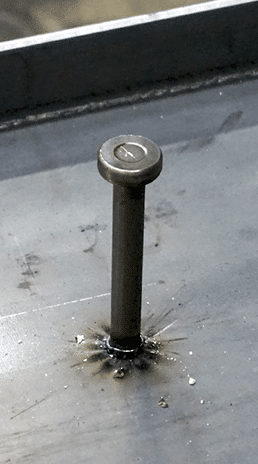
Stud welding is a process that joins a metal fastener, known as a stud, to another metal surface using either an electric arc or capacitor discharge. Unlike traditional welding methods, stud welding connects the base of the stud directly to the work-piece, creating a clean, high-strength bond with minimal surface marking. There are three main types of stud welding: drawn arc, capacitor discharge (CD), and short cycle.
Drawn arc welding is ideal for heavy-duty applications and thicker materials, commonly used in construction and shipbuilding. Capacitor discharge welding is better suited for thinner metals and delicate surfaces, often found in electronics and light fabrication. Short cycle welding bridges the gap between the two, offering a faster process for medium-thickness materials where speed and strength are both important.
What Materials Can Be Stud Welded?
There are several primary materials compatible with this method, including carbon steel, stainless steel, aluminum, and copper alloys. The selection of base material is closely linked to the type of stud welding process being utilized. A drawn arc stud weld is typically used for carbon and stainless steels due to their high melting points and strength, while a capacitor discharge (CD) stud weld is better suited for thinner materials like aluminum and copper alloys because it minimizes heat distortion.
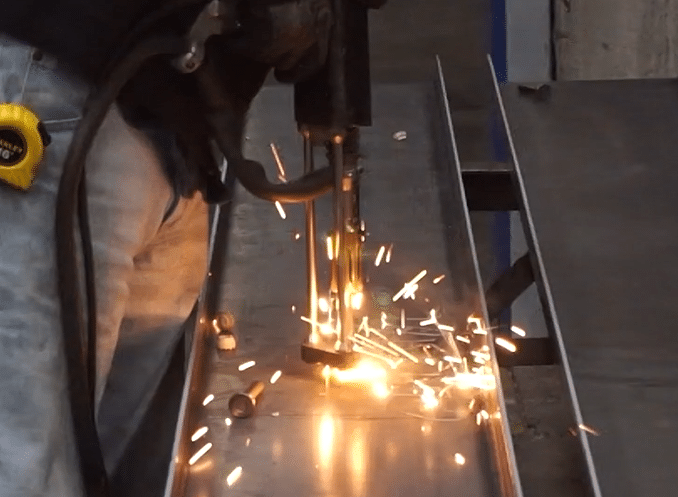
Proper surface preparation is crucial across all materials; contaminants like rust, oil, or paint must be removed to ensure a strong, clean weld. Additionally, selecting studs made of material compatible with the base metal, both in composition and diameter, is essential to prevent galvanic corrosion and to maintain mechanical strength and durability of the weld joint. These factors together ensure reliable bonding and long-term performance under operational stresses.
How Stud Welding Enhances Structural Strength
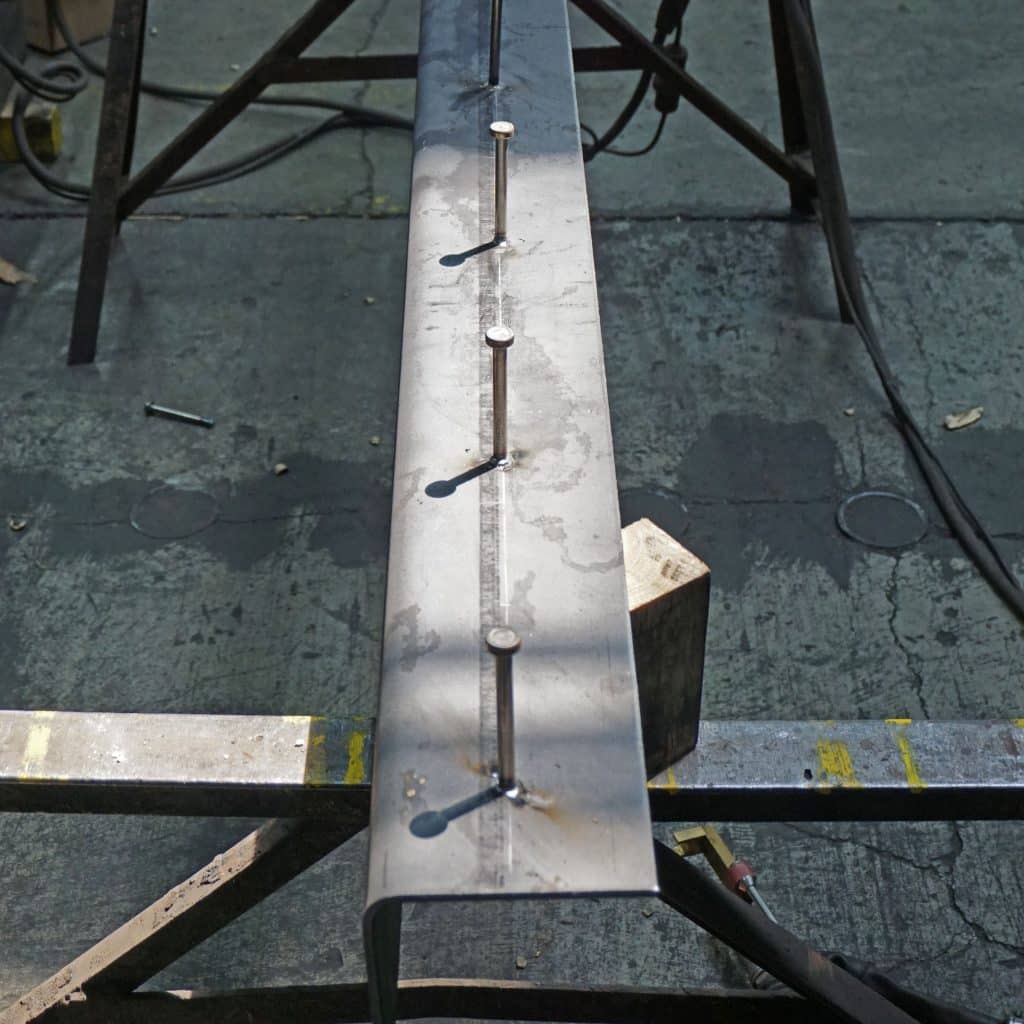
Stud welding significantly enhances structural strength by creating uniform, high-integrity connections that can withstand substantial tension and shear forces. Because the weld fuses the stud directly to the base metal in a single, high-strength joint, it distributes loads evenly and minimizes stress concentrations. This is especially vital in mission-critical structures such as framing systems, decking supports, and machinery mounts, where failure could compromise safety or functionality.
Additionally, a stud weld avoids surface punctures and eliminates back-side damage, preserving the structural integrity and appearance of the material. This is an essential advantage in exposed architectural elements or sealed systems where corrosion resistance, airtightness, or aesthetics are highly important. This combination of mechanical strength and non-invasive fastening makes stud welding a preferred method in demanding engineering applications.
Industries That Rely on Stud Welding for Reliability
Stud welding plays an indispensable role across industries such as construction, shipbuilding, automotive, and power generation, where structural reliability and performance are non-negotiable necessities.
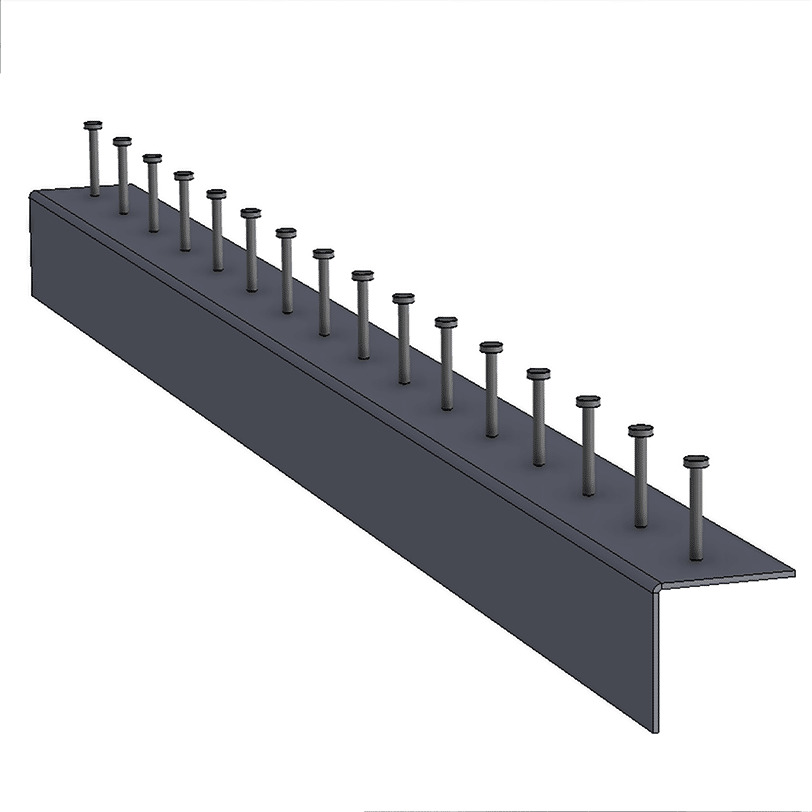
- In construction, it is commonly used for attaching shear connectors to steel beams, ensuring composite action between steel and concrete.
- Shipbuilders rely on it to secure insulation pins and electrical grounding points efficiently, even in confined marine environments.
- In the automotive sector, it is used to fasten components like heat shields and cable hangers without compromising vehicle integrity.
- Power generation facilities use it to attach support brackets, cable trays, and equipment mounts that must endure high heat and vibration.
These applications highlight that stud welding isn’t just widespread. It’s essential for safety, efficiency, and structural durability in mission-critical systems.
Stud Welding vs. Other Fastening Methods
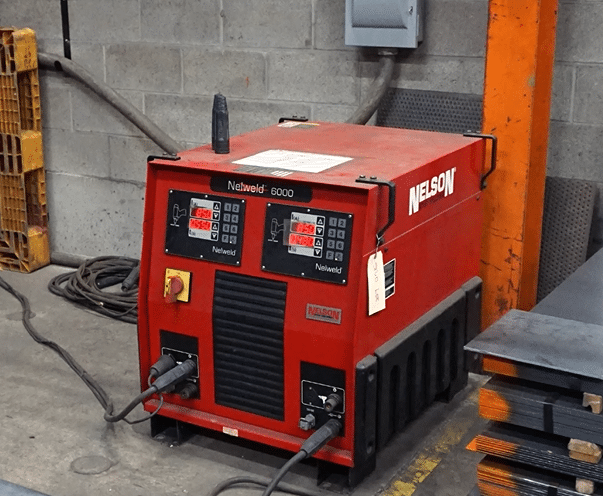
Stud welding stands out as the preferred alternative to bolts, adhesives, and spot welding in demanding applications due to its superior speed, strength, and efficiency. Unlike bolts, which require drilling, tapping, and access to both sides of the material, a stud weld creates a secure, one-sided connection in a fraction of the time and without weakening the base material.
Adhesives, while clean and lightweight, often lack the mechanical strength and temperature resistance needed in high-performance environments. Spot welding, though effective on thin materials, struggles with thicker metals and doesn’t offer the same load-bearing capabilities as a full-penetration stud weld.
In scenarios where long-term durability, clean appearance, and scalability are key, such as large-scale fabrication, infrastructure, or vehicle production, stud welding consistently outperforms other methods. It offers a cost-effective and low-maintenance solution that reduces component count while maintaining structural integrity.
Maximizing Performance with Stud Welding
Choosing to stud weld for industrial projects ensures unmatched strength, durability, and efficiency, which are key factors in applications where performance and longevity are critical. At Metal Fabrication Services, we bring in-house expertise, proven processes, and advanced equipment to every project, delivering stud welding solutions that consistently meet the highest standards. Our team is skilled in working with a wide range of materials and fabrication requirements, offering the flexibility to support both one-off custom components and large-scale production runs. With a focus on precision, consistency, and reliability, MFS ensures every weld is built to last, making us the trusted partner for industries that can’t afford to compromise. For more information about our equipment and machine capabilities, visit our services page.
Ready to Get Started with us on your next Metal Fabrication Project?

1 (800) 285-3056